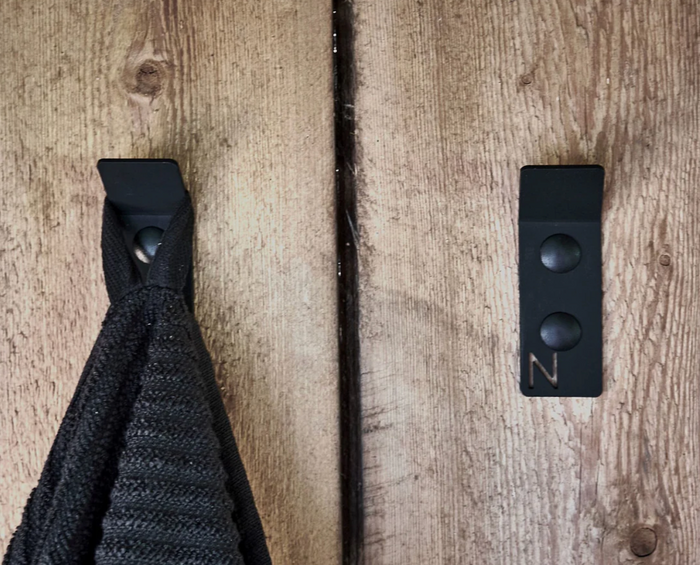
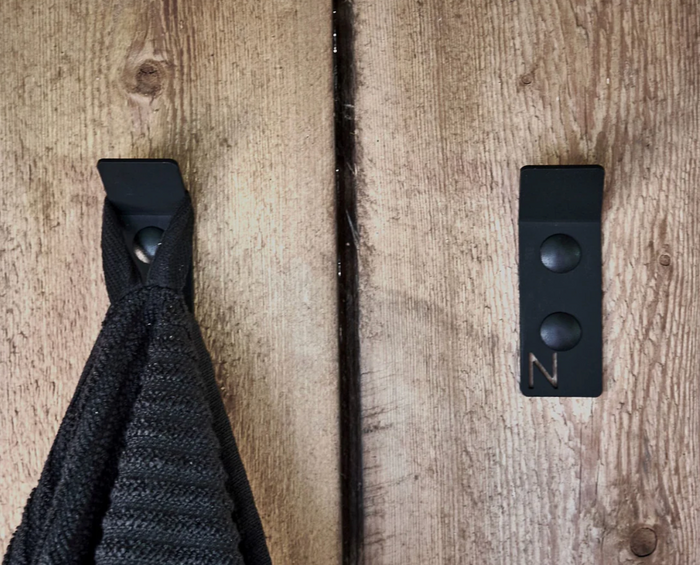
TL;DR. Powder-coated steel is dry pigment fused to bare metal under heat, forming a hard polymer shell that resists humidity and scratches far better than liquid paint. ATYP powder-coats 3mm cold-rolled steel for pieces like the BLEN Toilet Brush Holder and METI Bathroom Shelf, then backs the finish with a two-year guarantee.
Powder coating is the reason a steel shelf can sit in a steamy bathroom for years and still look like the day it was hung. At ATYP we build custom metal furniture from 3mm cold-rolled steel in our workshop in Slovakia, then finish almost every piece with powder-coated steel rather than liquid paint. The BLEN Toilet Brush Holder, the METI Bathroom Shelf, and the LUME Bedroom Shelf all wear the same kind of coating: a dry pigment fused to bare metal under heat. This guide explains what that process is and why it holds up.
What is powder-coated steel?
Powder-coated steel starts as bare metal and a fine, dry pigment. There is no solvent and no liquid carrier. The powder is given an electrostatic charge and sprayed at a grounded steel part, so the particles cling to the surface like iron filings to a magnet. The coated part then goes into a curing oven at roughly 180 to 200°C. Under that heat the powder melts and flows into an even layer, then crosslinks into a single polymer skin bonded to the steel.
What happens before the color goes on?
Before any pigment is sprayed, the raw steel is cleaned and pretreated, usually with an iron or zinc phosphate layer that gives the coating something to grip and adds a second line of defense against corrosion. Skip that step and even a well applied powder will lift over time. It is the least visible part of the job and the part that decides how long the finish holds.
How is powder coating different from paint?
Liquid paint dries. Powder coating cures. That difference in chemistry is why the two finishes age so differently.
Paint sits on the surface as a thin film held on by little more than adhesion. Powder coating crosslinks into a thicker, denser shell that is chemically bonded to the metal. In a neutral salt spray test, a standard way to measure corrosion resistance, powder-coated panels routinely run about five times longer than the same part finished with wet paint. A well-prepared powder-coated steel panel can pass 1,000 hours of salt spray with no blistering or rust creep at the edges.
How thick is the coating?
A decorative powder coat for furniture typically lands between 60 and 80 microns, around two to three thousandths of an inch. That is close to the thickness of a sheet of paper, but it behaves like armor. It resists the chips and scuffs that mark up painted hardware within a season, and it does not sag or leave brush marks the way liquid paint can.
Why powder-coated steel lasts
Three things work in your favor once the finish has cured.
- The polymer shell is hard. It shrugs off the daily knocks that scratch softer finishes, so a brush dropped back into the BLEN Toilet Brush Holder in Graphite does not leave a mark.
- It does not absorb water. Humidity and steam sit on the surface instead of soaking in, which is why powder-coated steel suits bathrooms and shower walls.
- It moves with the metal. Because the coating is bonded to the steel rather than layered on top, it expands and contracts with the part instead of cracking away from it.
On 3mm cold-rolled steel, that combination is hard to wear out. The structure carries the load and the powder coat protects the surface. It is the same logic behind our guide on why we use 3mm cold-rolled steel. We back the finish with a two-year guarantee, and that guarantee covers the powder coat itself, not only the structure underneath it.
Where powder-coated steel earns its place at home
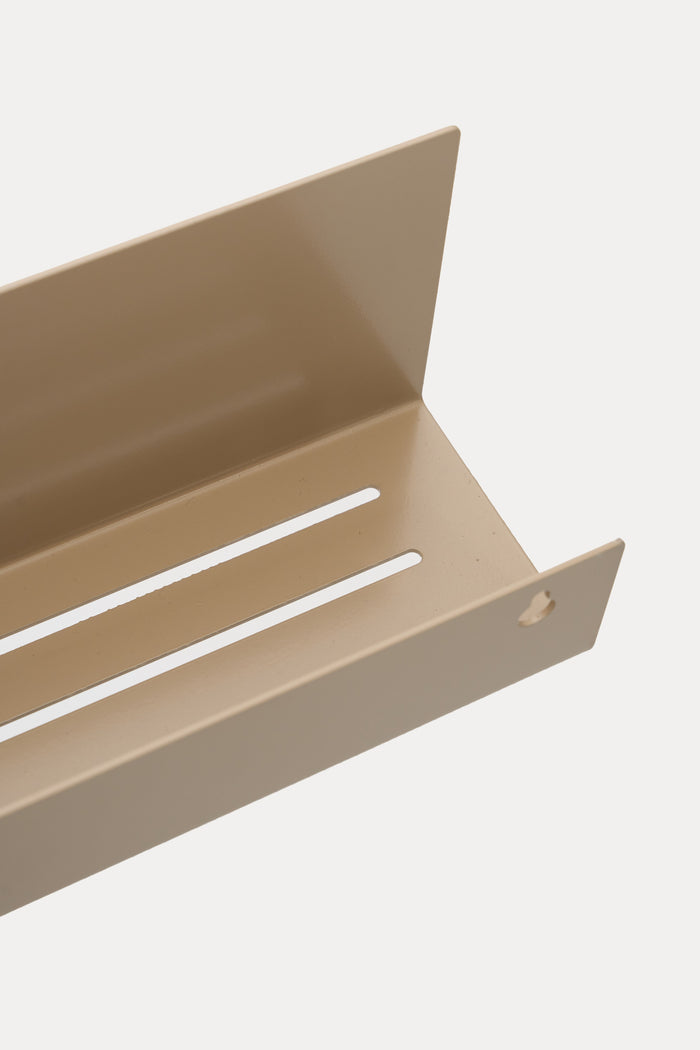
The bathroom is where this finish proves itself fastest, but it is not the only room for it. In daily wet-room use, the METI Bathroom Shelf in Slate (from 44 EUR) and the KANSO Towel Holder take steam and splashes without spotting. Move into a drier room and the same coating carries books and a lamp on the LUME Bedroom Shelf in Chalk.
Color is part of the spec here, not an afterthought. We offer the coating in a set of named finishes such as Chalk, Graphite, Slate, and Umber, mapped to RAL codes like RAL 9005 for a deep near-black. Because the color is baked into the cured layer, it will not peel back to a primer or fade to a chalky film the way some painted hardware does.
Is powder coating better for the environment?
Powder coating is also a cleaner process than spraying solvent-based paint, which matters for a workshop that ships across the EU.
- Almost no VOCs. Liquid paints release volatile organic compounds as they dry. Powder coatings emit close to none, cutting solvent emissions by roughly 99 percent.
- Less waste. Overspray that misses the part can be collected and reused, so transfer efficiency runs near 95 to 98 percent, against roughly 30 to 50 percent for many liquid systems.
- Lower energy per part on some lines, because there is no long solvent flash-off stage before the oven.
You can read how this fits the rest of how we work on our production page and sustainability page.
FAQ
Does powder-coated steel rust?
Bare steel rusts, but a cured powder coat seals the surface from water and air, and a phosphate pretreatment under the coating adds a second barrier. As long as the finish is not cut through to bare metal, powder-coated steel resists rust for years, even in a humid bathroom. If the coating is chipped down to the steel, touch it up so moisture cannot get underneath.
Is powder-coated steel good for bathrooms?
Yes. The cured polymer layer does not absorb water, so steam and splashes sit on the surface instead of soaking in. That is why pieces like the BLEN Toilet Brush Holder and METI Bathroom Shelf are finished this way. Wipe them with a soft cloth and mild soap, and avoid abrasive scourers that could scratch the coating.
How long does a powder coat finish last?
Indoors and on a wall, a quality powder coat on steel can last well over a decade without fading or peeling. Industry salt spray tests show powder-coated steel lasting around five times longer than wet paint before corrosion appears. ATYP backs the finish on every piece with a two-year guarantee.
Is powder coating better than paint?
For steel furniture and hardware, usually yes. Powder coating cures into a thicker, harder shell that is bonded to the metal, while paint dries as a thin film held on by adhesion alone. Powder resists chips and humidity better, and it does so without the solvents that liquid paint releases as it dries.
Can powder-coated steel be repaired?
Small scratches can be touched up with a matching paint pen, though the repair will not be as tough as the original cured layer. For deeper damage, the part can be stripped and recoated. Because ATYP works made to order, we can advise on the finish that suits how hard a piece will be used.
Browse the finishes across our bathroom accessories collection, or start from raw steel on the customization page. Configure yours.
ATYP is a Slovak design studio crafting custom metal furniture from a workshop in Slovakia. Every piece is configured to order, hand-finished, and backed by our two-year guarantee.
Written by ATYP for ATYP, custom metal furniture made in Slovakia.
Design your own